

 by B. Aslı Saraçoğlu Uzunoğlu
24 April 2026: Değer Boden published article on Kluwer Arbitration Blog entitled “Climate Damage from Armed Conflict and Emerging Erga Omnes Environmental Obligations”
While international climate discussions continue to focus on the Paris Agreement, COP processes and net-zero pathways, recent wars have already generated millions of tonnes of CO₂ emissions within a very short period of time. The climate cost of armed conflict remains underexamined.
On the other hand, as scientific attribution becomes more sophisticated, and as developments in international humanitarian law, environmental law, and recent jurisprudence continue to evolve, the environmental damage caused by armed conflict is becoming harder to treat as a purely bilateral matter between directly affected states. It increasingly raises questions about broader obligations owed to the international community.
In my recent article, “Climate Damage from Armed Conflict and Emerging Erga Omnes Environmental Obligations,” published on the Kluwer Arbitration Blog, I explore whether we may be witnessing a movement from traditional bilateral responsibility toward forms of collective responsibility grounded in the protection of global environmental interests.
This is not yet settled law. But it is, in my view, a legal development that deserves much closer attention.
The article is available at the link below.
 by B. Aslı Saraçoğlu Uzunoğlu
26 March 2026: Client Alert: Rethinking Force Majeure and Hardship in the Wake of Geopolitical Disruption
Beyond Boilerplate: Rethinking Force Majeure and Hardship in the Wake of Geopolitical Disruption
Recent developments in the Middle East, most notably the escalation of armed conflict and the strategic disruption associated with the closure of the Strait of Hormuz, have once again demonstrated how quickly the assumptions underpinning international contracts can unravel. For actors operating in energy, infrastructure, shipping, and commodities sectors, these developments are not merely abstract geopolitical risks but immediate triggers of non-performance, delay, price volatility, and regulatory exposure. Recent practice indicates a noticeable rise in disputes arising from supply interruptions, sanctions-related impediments, and significantly increased costs of performance.
These developments bring into sharp focus a fundamental question of contractual risk allocation: who ultimately bears the consequences when the contractual equilibrium is fundamentally disturbed?
At the core of this inquiry lies the enduring tension between pacta sunt servanda, the principle that contracts must be performed, and clausula rebus sic stantibus, the recognition that contractual obligations cannot remain absolute in the face of radically changed circumstances. This tension is not merely theoretical; it is reflected in the markedly different ways in which civil law and common law systems respond to disruption.
1. Force Majeure: When Performance Becomes Impossible
Force majeure addresses situations in which contractual performance becomes physically or legally impossible due to events beyond the control of the parties.
From a comparative perspective, the divergence between legal systems is pronounced:
Civil Law Approach (Structured and Codified):
Civil law jurisdictions provide a relatively predictable framework. Under Article 1218 of the French Civil Code, an event must be external, unforeseeable, and irresistible. Where these criteria are met, performance is suspended if the impediment is temporary, or the contract is automatically terminated if performance becomes permanently impossible (résolution de plein droit). Similar concepts exist across civil law systems, grounded in the principle that no party is bound to perform the impossible.
Common Law Approach (Contract-Driven and Restrictive):
In contrast, common law systems, particularly English law, do not recognize force majeure as a standalone doctrine. Relief depends entirely on the wording of the contract. In the absence of an express clause, parties must rely on the doctrine of frustration, which is applied narrowly. As established in Davis Contractors v Fareham UDC, performance must become “radically different,” not merely more onerous or expensive. Courts have consistently resisted attempts to expand this threshold.
The practical implication is clear: under common law, inadequate drafting can leave parties without effective relief, even in the face of significant disruption.
2. Hardship: When the Economic Balance Collapses
Hardship addresses a different category of disruption where performance remains possible but has become excessively burdensome due to unforeseen changes in circumstances.
Civil Law Approach (Flexibility and Adaptation):
Civil law systems explicitly recognize the need to preserve contractual equilibrium. Under Section 313 of the German Civil Code (Wegfall der Geschäftsgrundlage) and Article 1195 of the French Civil Code (imprévision), parties are expected to renegotiate when circumstances fundamentally change. If renegotiation fails, courts may adapt or terminate the contract to restore balance. This reflects a broader commitment to good faith and fairness in long-term contractual relationships.
Common Law Approach (Rigidity and Certainty):
By contrast, common law systems generally reject a doctrine of hardship. The prevailing view remains that parties must “stick to their bargain.” Courts have consistently held that increased costs or economic disadvantages do not justify non-performance. In The Sea Angel [2007], the court reaffirmed the narrow scope of frustration, while in Tsakiroglou & Co Ltd v Noblee Thorl [1962], the closure of the Suez Canal, despite significantly increasing the cost and duration of performance, was held insufficient to discharge the contract. The rerouting obligation remained.
These authorities illustrate a consistent principle: economic hardship, however severe, is typically treated as a commercial risk rather than a legal excuse under common law.
3. Strategic Takeaways for Contracting Parties
Against the backdrop of current geopolitical volatility, reliance on default legal doctrines is increasingly inadequate. A more deliberate and forward-looking contractual strategy is required.
Move Beyond Boilerplate
Standard force majeure clauses often fail to capture the complexity of modern disruptions. To achieve true contractual resilience, drafting must move beyond the abstract and name the actual threats: from the sudden closure of the Strait of Hormuz to the complex web of shifting sanctions and regulatory gatekeeping. We must also rethink what an “impediment” really looks like. In the modern market, a logistical deadlock or a legal barrier can be just as fatal to a contract as physical impossibility, and our definitions need to reflect that reality.
Align Drafting with Governing Law
A single event can lead to two completely different legal realities depending on the jurisdiction. For instance, a clause that provides ironclad protection in a civil law setting might offer zero relief under common law scrutiny if the drafting is even slightly off. This requires a conscious alignment between contractual language and the governing legal framework.
Prioritize Procedural Compliance
In practice, force majeure and hardship defenses frequently fail due to procedural shortcomings rather than substantive weaknesses. Strict compliance with notice provisions, evidentiary requirements, and mitigation obligations is essential to preserve contractual rights.
Use Renegotiation Strategically
Particularly in civil law contexts, the duty of good faith provides a powerful basis for renegotiation. Proactive engagement at an early stage can prevent escalation into formal disputes and preserve long-term commercial relationships.
Conclusion
In an environment where geopolitical disruption is no longer exceptional but increasingly systemic, force majeure and hardship clauses can no longer be treated as standard boilerplate. They are, instead, central instruments of risk allocation and contractual resilience. A well-drafted clause does more than allocate risk, it anticipates disruption, structures party conduct in times of crisis, and ultimately shapes the outcome of any dispute that may arise. For parties operating in volatile sectors and regions, investing in precise and context-specific drafting is essential to maintaining contractual certainty in an increasingly unpredictable world.
by B. Aslı Saraçoğlu Uzunoğlu20 January 2026: Boden Law publishes report on Türkiye’s Energy Landscape: Regulatory Shifts in 2025
As we approach the end of the first month of 2026, we have taken the opportunity to look back at the most significant regulatory developments and policy changes that shaped Türkiye’s energy markets in 2025.
Our associates Can Yıldız and Ceren Karaciğer have compiled a concise overview of the key legislative and regulatory updates across the electricity, natural gas and renewables with a focus on developments most relevant to market participants and investors.
We hope this summary provides a helpful reference for those following regulatory trends in Türkiye’s energy sector and contributes to ongoing discussions on market evolution and sustainability.
Our summary report on these developments is shared below. For further information or inquiries, please contact us at info@boden-law.com
Click here to view the report.
 by B. Aslı Saraçoğlu Uzunoğlu
21 July 2025: Climate Law Enacted!
The Climate Law numbered 7552 has been enacted and published in the Official Gazette dated 9 July 2025 and numbered 32951. This law is Turkey’s first comprehensive climate legislation. The law aims to fight climate change, support green growth, and ensure that net zero emissions goals are met.
Our brief report on the law can be found at the link below. For more information, you can contact us at info@boden-law.com.
Click here for our report.
by B. Aslı Saraçoğlu UzunoğluBoden Law’s contribution to Lexology’s Panoramic: Electricity Regulation 2025 is now live!
Boden Law is proud to announce our contribution to Lexology‘s Panoramic: Electricity Regulation 2025 is now live! ⚡
As contributors, Deger Boden and Dila Küçükali from Boden Law provide a comprehensive analysis of Turkey’s electricity regulation landscape. This guide dives deep into the evolving regulatory framework, with particular emphasis on the latest developments in climate change, sustainability, and alternative energy sources.
The report covers key aspects such as power generation, transmission, distribution, public service obligations, and the role of competition law. We also explore the legal and policy trends that will shape the future of Turkey’s energy market, ensuring stakeholders are well-equipped to navigate the shifting regulatory environment.
For a detailed comparison and to explore the latest trends driving electricity regulation in Turkey and beyond, read the full publication on Lexology.
Click here to read the full report.
by B. Aslı Saraçoğlu UzunoğluOur report on the changes in the Electricity Market License Regulation is out now!
New Regulation from EMRA: Changes in the Shareholding Structure of Preliminary License Holder Companies are Now Subject to the Approval of EMRA!
With the regulation published on 17 August 2024 in the Official Gazette amending the Electricity Market License Regulation, it is now mandatory to have the approval of EMRA for changes to be made in the shareholding structure of legal entities at the preliminary license stage. While previously a written notification was sufficient, with the new regulation, changes made without approval may lead to the cancellation of the preliminary license. This critical regulation is of great importance for investors and energy sector stakeholders.
by B. Aslı Saraçoğlu UzunoğluOur report on the changes to the Communique Regarding the Application of the Decision Related to Government Aid in Investments is out now!
Changes have been made on 24 and 25 August, 2004, to the Communique Regarding the Application of the Decision Related to Government Aid in Investments. Accordingly, changes will be made in investment expenditures that are not evaluated within the scope of incentive certificates, with the aim of increasing domestic production, especially in solar energy, and intensifying work in this field.
by B. Aslı Saraçoğlu UzunoğluOur report on the Regulation Regarding the Transfer of Personal Data Abroad is out now!
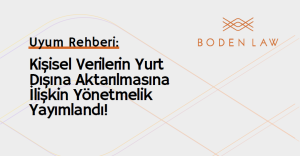
International Data Transfer Regulation Enacted!
On July 10, 2024, the “Regulation on the Transfer of Personal Data Abroad” was published in the Official Gazette and came into force, bringing significant changes to the processes of transferring data abroad.
This new regulation clarifies the methods to be followed in the transfer of personal data abroad. Details regarding adequacy decisions, appropriate safeguards, and exceptional circumstances have been specified.
KVKK Yurt Dışı Aktarım Yönetmeliği Yürürlüğe Girdi!
10 Temmuz 2024 tarihinde Resmi Gazete’de yayımlanarak yürürlüğe giren “Kişisel Verilerin Yurt Dışına Aktarılmasına İlişkin Yönetmelik” ile yurtdışına veri aktarımı süreçlerinde önemli değişiklikler yapıldı.
Bu yeni düzenleme ile kişisel verilerin yurt dışına aktarımında izlenecek yöntemler netleştirildi. Yeterlilik kararları, uygun güvenceler ve arızi durumlara ilişkin detaylar belirginleştirildi.
 by B. Aslı Saraçoğlu Uzunoğlu
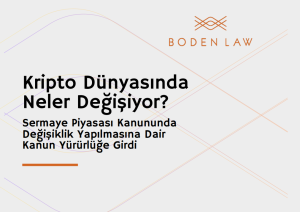
Our report on the Changes in the Crypto World is out now!
The amendments to the Capital Markets Law, published in the Official Gazette on July 2, 2024, have come into effect, redefining the scope of crypto assets, platforms, and service providers’ responsibilities.
These regulations introduce mandatory establishment and operation permits for crypto asset service providers and set forth new provisions regarding the custody of clients’ crypto assets by platforms. Additionally, sanctions for unauthorized activities have been detailed within this framework.
2 Temmuz 2024 tarihinde Resmi Gazete’de yayımlanarak yürürlüğe giren Sermaye Piyasası Kanunu’ndaki değişikliklerle, kripto varlıkların tanımı, platform ve hizmet sağlayıcılarının sorumlulukları kapsamlı bir şekilde yeniden düzenlendi.
Bu düzenlemeler, kripto varlık hizmet sağlayıcılarına kuruluş ve faaliyet izni alma zorunluluğu getirirken, aynı zamanda platformların müşterilerine ait kripto varlıkların saklanmasına ilişkin yeni hükümler içermektedir. Ayrıca, izinsiz faaliyet gösterenlere yönelik yaptırımlar da bu kapsamda detaylandırılmıştır.
Bu önemli değişikliklerin sektörde yaratacağı etkileri ve uyum sürecine dair hazırladığımız kapsamlı raporu ekte bulabilirsiniz.